

Marine Bunker Fuels & Lubricants Operations Argentina
Operated by Distribuidora Puerto Buenos Aires

Grupo Kenport in Argentina operates through Distribuidora Puerto Buenos Aires, acting as a lead physical supplier within our regional network. We coordinate the supply of bunker fuels, marine lubricants, and urea across the Argentine fluvial system, the Zona Común bunkering area, and key maritime gateways along the South Atlantic.
Bunker Fuel Supply: Partnerships with YPF, PAE & Trafigura
We coordinate the supply of high-quality [Bunker Fuels], ISO 8217 compliance by sourcing directly from Argentina’s primary producers: YPF, PAE, and Trafigura.
This allows us to offer competitive regional pricing for:
-
Fuel Oils: HFO/IFO and Very Low Sulfur Fuel Oil (VLSFO).
-
Marine Diesel & Gas Oil: MDO/MGO with 100 ppm and 500 ppm sulfur cuts.
-
Marine Urea (AUS 40) supply across all major Uruguayan ports to ensure compliance with international emission control standards.
-
Availability: Delivery at berth (truck/barge) or via Ship-to-Ship (STS) in Zona Común.


Marine Urea (AUS 32 / 40) High-grade Supply
Kenport coordinates the supply across all major Argentinians ports of Marine Urea Grades 32 and 40 to ensure compliance with international emission control standards.


Strategic Alliance: Iconic & Texaco Marine Lubricants
Through our strategic agreement with Iconic, we manage the international marine business for Texaco in Argentina.

Strategic Ports & Operational Infrastructure (Argentina)
Our logistics network is specifically designed to support the Hidrovía and the major maritime corridors. We provide comprehensive supply coordination at the most critical ports for international trade:
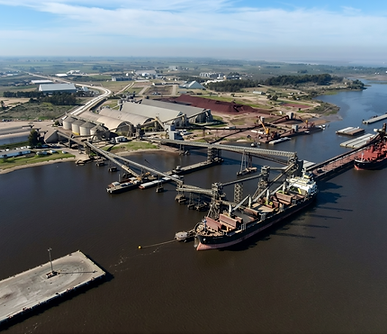
Rosario & San Lorenzo (The Greater Rosario Complex)
-
Strategic Role: The world’s primary agri-bulk export hub, handling over 80% of Argentina’s grain exports
-
Operational Context: These ports are located along the Trunk Inland Waterway (TIW), roughly 400-450 km upriver from the Atlantic
-
Navigation & Draft: Traditionally maintained at a standard 34-foot (10.36m) navigable draft . However, during low-water periods, the Prefectura Naval Argentina (PNA) may impose tighter restrictions (sometimes capping drafts as low as 8.8m), making real-time coordination essential for fully laden Panamax vessels
-
Bunker & Supply Logistics: Bunkering and slop operations are primarily conducted at roads via barge . Major terminals like Renova, LDC, and Cargill Quebracho are core coordination points for vessel replenishment
.png)
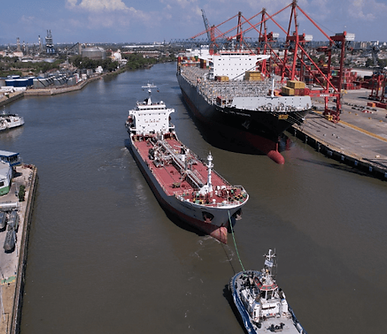
Port of Buenos Aires & Dock Sud
-
Strategic Role: The nation's premier container gateway, handling 85% of all containerized cargo in Argentina
-
Operational Context: Situated on the Río de la Plata, it serves as the interface between deep-sea maritime routes and fluvial traffic
-
Infrastructure: The port is divided into Puerto Nuevo (central urban area) and Dock Sud (industrial character), offering diverse berth options for different vessel types
-
Bunker & Supply Logistics: Supply is coordinated via barge and truck-to-ship at berth. It is a critical hub for vessels requiring fast turnaround and direct access to international fuel traders
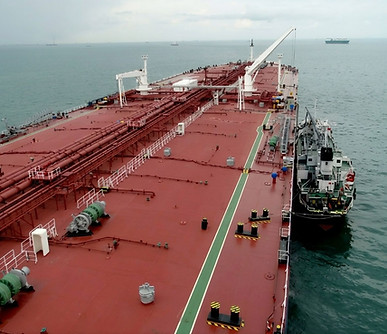
Zona Común
(La Plata Roads)
-
Strategic Role: The "Waiting Room" and maritime gateway for the entire upriver system
-
Operational Context: Located southeast of Buenos Aires off the Port of La Plata (-34.75° / -57.83°), this is the primary anchorage where pilotage hand-offs occur between sea and river pilots
-
Bunkering Excellence: This is the most critical offshore bunkering zone in the region. Ship-to-Ship (STS) transfers here allow vessels to bypass high port fees and deep-draft constraints .
-
Regulatory Note: As of late 2025, the mandatory Oil Spill Removal Organization (OSRO) certification for receiving vessels has been repealed, though tankers remain subject to specific pollution prevention rules. Recent customs resolutions also now allow outbound vessels to take on bunkers up to full tank capacity before departing abroad.
Specialized Logistics: Cabotage, Domestic Shipping, and Onshore/Offshore Supply
Our operational flexibility allows us to serve major international vessels through both onshore and offshore supply operations. We are experts in Domestic Shipping and Cabotage within the Argentine fluvial system, providing critical support for export-oriented traffic through the Paraná–Paraguay River and the River Plate to Atlantic deep-water hubs such as Bahía Blanca and Quequén.
South Atlantic Maritime Gateways
(Deep-Water Hubs)
Beyond the fluvial systems, we coordinate complex supply operations across Argentina’s primary deep-water maritime ports. These hubs are critical for large-draft vessels, including Capesize and large Tanker units

Port of Bahía Blanca (Ingeniero White & Puerto Galván)
-
Strategic Role: Argentina’s premier deep-water port complex and a leading hub for petrochemical, grain, and energy exports
-
Operational Context: Situated in the southwest of Buenos Aires Province, it offers a 96 km entrance channel with depths allowing drafts up to 45 feet (13.7m)
-
Bunker & Supply Logistics: We coordinate specialized barge bunkering (including VLSFO, IFO and MGO/MDO) and bulk lubricant delivery. The port is a vital refill point for vessels departing for long-haul international routes
-
Facility Highlights: Features high-speed loading terminals for grain (up to 2400 TPH) and specialized liquid bulk jetties for hydrocarbons and fertilizers
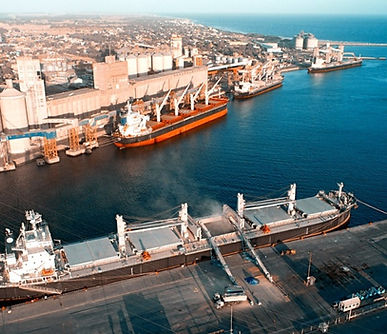
-
Strategic Role: A primary grain export terminal on the open Atlantic coast, known for rapid vessel turnaround
-
Operational Context: Characterized by its direct access to the sea and protection from southern swells via massive breakwaters
-
Bunker & Supply Logistics: Bunkering and slop operations are primarily coordinated via truck-to-ship at berth. While FOIL supply is limited compared to Zona Común, it remains a critical point for Marine Lubricants and Urea replenishment during cargo operations .
-
Draft & Capacity: Ongoing dredging maintains depths for vessels with an LOA up to 230m and drafts around 40-45 feet (12.3m - 13.7m) depending on the terminal
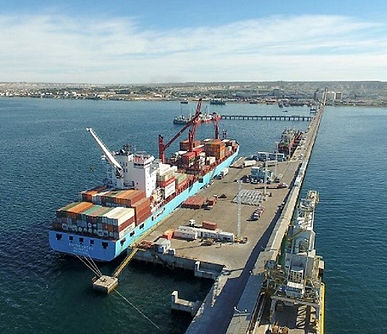
Port of Madryn &
Southern Hubs
-
Strategic Role: Key logistics centers for the aluminum industry, fishing, and emerging renewable energy projects in Patagonia
-
Bunker Availability: Coordination of MGO and lubricants for regional cabotage and international vessels navigating the South Atlantic route
